Trending Topics
CROSS-911_25_Remembrance_Promo_Graphics-Super_Topic_Banner-3540X750.png

On September 11, 2001, terrorists used hijacked airplanes as weapons to attack the United States. Two planes hit the World Trade Center towers in New York City. One plane flew into the side of the Pentagon. A fourth plane crashed in a Pennsylvania field after passengers stormed the cockpit. Nearly 3,000 people died in the attack.

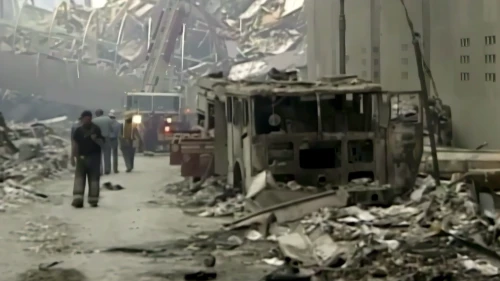
In the aftermath, thousands of first responders converged on the sites of destruction, climbing through mountains of smoking debris and rubble in a race to find survivors. Ultimately, 8 EMS providers and 343 firefighters died that day and countless more have succumbed to 9/11-related illnesses from their time working at Ground Zero.

Read the stories of survivors, as well as how lessons learned are impacting the way first responders of today train and respond to incidents. To share your 9/11 story, email editor@ems1.com.

SPONSORED BY
FEATURED CONTENT
These 8 habits help build the physical, clinical and personal readiness to meet it
Twenty-five years after the attacks, Esposito reflects on sacrifice, resilience and the changes that reshaped emergency response — and challenges today’s responders to live up to the standard set by those who served
The job is not to prepare for another 9/11. It is to prepare responders for the next call
Marking anniversaries, like 9/11, is important for honoring those experiences and carrying forward the lessons learned
They searched for survivors, handled remains, supplied emergency equipment and kept the city’s jails operating. Twenty-five years later, their story is still being told.
Narrated by Gary Sinise, the film features firsthand accounts from officers, firefighters and EMS providers who responded on one of the nation’s darkest days
9/11 NEWS
FDNY Chief of Department John Esposito recounts FDNY’s devastating losses, the decisions that saved thousands of lives and why honoring 9/11 means preparing the next generation to meet the moment
How one day transformed emergency preparedness and the lives of generations of first responders
Richard Allen Pearlman was the youngest first responder killed on 9/11. For a small volunteer ambulance corps, keeping his memory alive has become part of the job.
Americans are commemorating the 25th anniversary of the Sept. 11 attacks with memorial ceremonies, moments of silence, tributes to first responders and volunteer projects nationwide
Dr. John Howard receives another six-year term overseeing NIOSH and a health program serving more than 140,000 9/11 responders and survivors
FDNY honored the 343 members killed on 9/11 and 453 more who have since died from World Trade Center-related cancers and respiratory illnesses
The 9/11 Memorial & Museum is adding a permanent seventh moment of silence to honor first responders, recovery workers and survivors who died from 9/11-related illnesses
Nebraska Task Force 1 members deployed to the Pentagon and Ground Zero after 9/11, confronting collapsed buildings, toxic smoke and an unprecedented search-and-rescue mission
New York City opened a public portal containing 170,000 pages of 9/11 records sought for years by first responders, survivors and families concerned about Ground Zero health risks
As deaths from 9/11-related illnesses surpass 6,000, advocates are pressing New York City to release decades-old records detailing air quality and toxic exposures at Ground Zero
Research on World Trade Center responders found PTSD and prolonged Ground Zero exposure were associated with signs of accelerated brain aging
The FDNY added 36 names to its World Trade Center Memorial Wall, bringing to 438 the number of fire and EMS members honored after dying from illnesses linked to Ground Zero
Lillian Bonsignore spent weeks working the pile; 25 years later, the area still triggers her brain to recall the smell “like it’s day one”
FDNY researchers are seeking federal coverage for cardiovascular disease, cognitive decline and other conditions as firefighters and EMS members exposed to Ground Zero toxins age
The familiar images tell only part of the story. These lesser-known accounts reveal how Sept. 11 continues to shape lives and public safety 25 years later.
A military judge scheduled Khalid Sheikh Mohammed and three alleged accomplices to stand trial beginning June 5, 2028, more than 26 years after the Sept. 11 attacks
FDNY Assistant Commissioner for Communications Steve Gregory reflects on the unsung heroes of the 9/11 response:

“I don’t know what the next level beyond fantastic is”
First responders can be trusted voices, separating fact from fiction while keeping the focus on evidence and remembrance
The Tunnel to Towers Foundation is transporting a steel beam from the South Tower of the World Trade Center to communities across the United States
Go inside the National September 11 Memorial & Museum and the 9/11 Museum Workshop
What began as scribbled names on yellow legal pads ultimately became FDNY’s official missing and deceased list — the 343
Rear Admiral Lisa Delaney discusses eligibility, covered conditions and why some responders are only now seeking care
The Somerset County event brought first responders together at Flight 93 National Memorial to mark 25 years since the Sept. 11 attacks
A bipartisan group of lawmakers is calling on the HHS Secretary to reappoint Dr. John Howard to lead the WTC Health Program
City lawyers say no responsive records were found, while Mayor Zohran Mamdani promises to release Ground Zero air-quality documents before the 25th anniversary of the Sept. 11 attacks
The new World Trade Center Retired Responders Memorial Wall honors 154 retired FDNY members who assisted in rescue and recovery efforts after Sept. 11 and later died from WTC-related illnesses
City leaders are pushing for funding to determine when officials first knew Ground Zero air quality was dangerous and to release records tied to post-9/11 exposure risks
In Sacramento, nearly 40% of EMS calls were classified as non-emergencies, tying up ambulances and EMS crews, delaying urgent responses
The Secretary of Health and Human Services restores hiring for the World Trade Center Health Program, easing shortages that have delayed care and claims for thousands of responders and survivors